Non-Dairy Milk Products: Pros, Cons & How to Choose
On a recent road trip with my husband, I ordered a decaf coffee with a splash of coconut milk. He asked how it compared to the other non-dairy milk products on the market. After I gave him a thorough explanation, I realized just how overwhelming the options have become.
Whether you’re avoiding dairy due to lactose intolerance, sensitivities to casein or whey, concerns about hormones, or simply looking to make more intentional choices, there are more dairy-free milk alternatives than ever before.

From simple, creamy beverages like cinnamon milk to breakfast staples such as mango chia seed pudding, non-dairy milks can easily fit into your daily routine.
However, not all dairy-free milks are created equal. Some are simple and nourishing with limited ingredients. Others are filled with additives and sugar, which may not be the best fit for your long-term health and wellness.
This guide will walk you through the most common non-dairy milk products, along with their pros and cons, and how to choose the best option for your needs and values.
What Are Non-Dairy Milk Products?
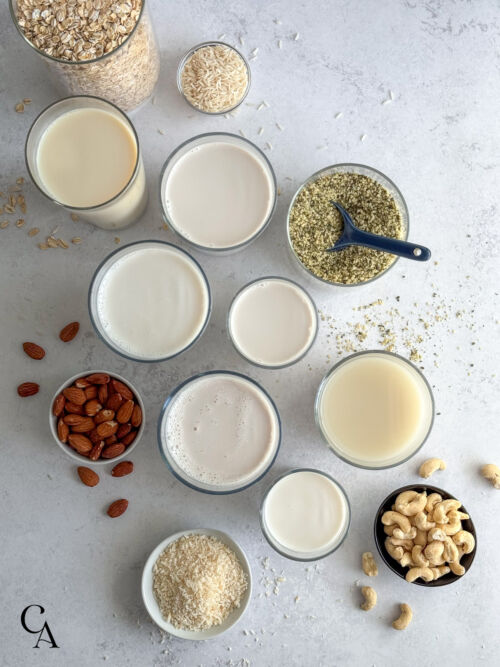
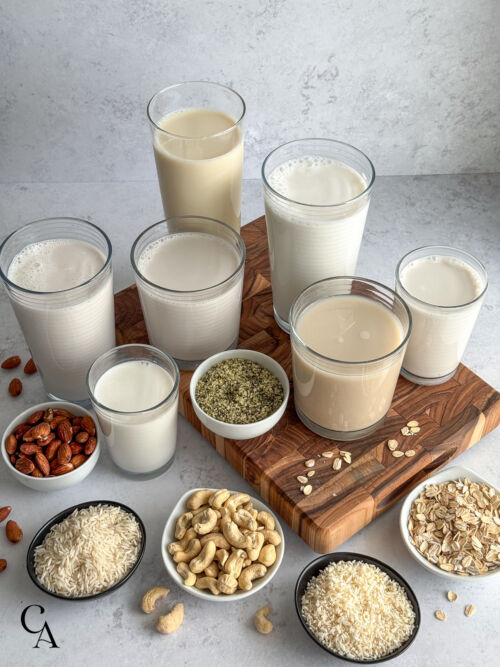
Non-dairy milks are plant-based beverages made by blending water with ingredients such as nuts, seeds, grains, or legumes, then straining the mixture to create a milk-like texture and appearance. They’re great in beverages, baked goods, and for cooking.
Almond, cashew, coconut, hemp, oat, macadamia nut, rice, and soy are all popular varieties that are readily available at most major grocery stores.
Most of these products don’t require refrigeration until opened, so you’ll find various options on grocery store shelves and in the refrigerated section.
How Do Dairy-Free Milks Compare to Dairy?
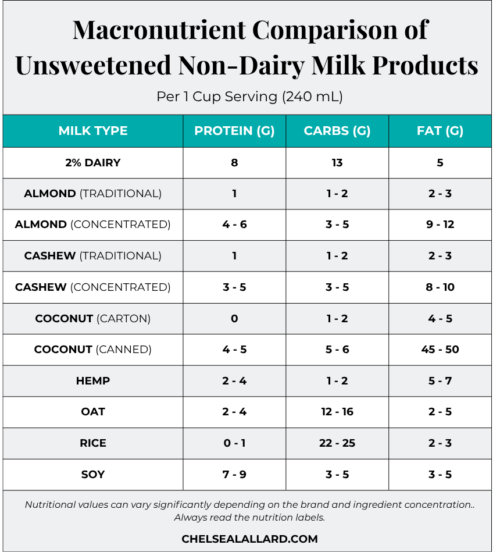
Let’s talk macros. For reference, one cup of 2% cow’s milk contains approximately:
- 5 grams of fat (3g saturated)
- 13 grams of carbohydrates (12g sugar)
- 8 grams of protein
Many non-dairy milk products differ significantly, especially regarding protein content.
- Higher protein: Soy milk
- Moderate protein: Hemp, oat, concentrated nut milks (almond, cashew, walnut, etc.)
- Minimal protein: Coconut, rice, traditional nut milks,
While protein is an important consideration when choosing which option is best for you, there are many other factors to consider as well.
What to Look for on Labels
Most, but not all, non-dairy milk products contain a long list of ingredients on the label. These include:
Added Sugars – Grain-based milks already contain significant amounts of carbohydrates and natural sugars, and very little fat to balance them. But all varieties come in sweetened versions. Unsweetened varieties are better for balancing blood sugar.
Fortification – Just like cow’s milk, many dairy-free milks are enriched with some essential vitamins and minerals—this isn’t a bad thing. Common examples are calcium and vitamins A, D, and B12.
Additives – To mimic the thicker, fatty texture of cow’s milk or cream and improve flavor. Common additives include:
- Guar gum, xanthan gum, gellan gum, oils
- Carrageenan (controversial for gut health)
- Vegetable (canola/rapeseed) or seed oils (often genetically modified, or GMO)
- Natural or artificial flavorings
Whenever possible, look for unsweetened, organic non-dairy milk products with minimal ingredients. I break down additional variety-specific considerations below.
Once you find one you like, use it just as you’d use milk, whether that’s pouring it into an iced matcha latte or blending it into mashed sweet potatoes for added creaminess.
Types of Non-Dairy Milk Products
This list is thorough, but not exhaustive. New dairy-free milk substitutes are entering the market every day. Ingredients and macronutrients vary greatly even between different brands of the same type, and it would be impossible to catalog them all. In my experience, these are the most common.
Almond Milk
One of the most popular dairy-free milk substitutes. Other nut-based milks (like macadamia, walnut, and hazelnut) exist, but their nutritional profiles vary, and they’re less common outside of health food stores.
Pros:
- Widely available and inexpensive
- Low in carbohydrates (unsweetened)
- Contains healthy mono- and polyunsaturated fats
- Mild flavor works well in smoothies, beverages, baking, and sauces
- Concentrated forms with minimal ingredients are available.
Cons:
- Lower in protein, especially non-concentrated varieties
- Almond farming is water-intensive, posing serious environmental concerns
- Organic options are hard to find
- Simpler, cleaner versions tend to be more expensive and may have a chalky taste
- Not suitable for those with nut allergies
TIP:
Look for unsweetened almond milk with minimal ingredients. Califia, Elmhurst, and Three Trees are popular brands.
Almond Milk Recipes
Almond milk is incredibly versatile. Try it in peppermint hot chocolate, dark chocolate hummus, or even savory dishes like vindaloo chicken. My pumpkin custard is a seasonal favorite.
Cashew Milk
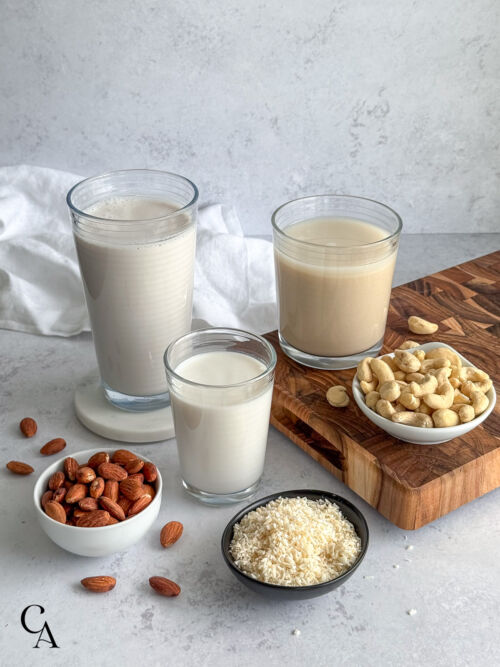
Another nut milk that is gaining in popularity.
Pros:
- Naturally sweet flavor
- Fewer carbs than oat milk
- Healthy fats
- Moderate protein
CONS:
- Fewer brands to choose from
- Common allergen
TIP:
Elmhurst Milked Coconuts & Cashews™ is amazing in coffee. (Not sponsored, just a fan).
Cashew Milk Recipes
Use cashew milk anywhere you want a subtly sweet flavor without the sugar. It’s delicious in my decaf tiramisu latte recipe and my strawberry matcha.
Coconut Milk
Coconut milk comes in two forms: cartons (better for drinking) and cans (better for baking or cooking).
Pros:
- Low in carbohydrates
- Rich and creamy, if not watered down
- Available as milk or cream, with differing fat levels
- Canned, additive-free versions are available
Cons:
- High in saturated fat, so best in limited quantities
- Minimal protein
- Distinct flavor that’s not for everyone
- Canned coconut milk has a shorter shelf life once opened (about 5-7 days)
TIP:
If using canned coconut milk in small amounts (like for coffee creamer), consider buying small cans to reduce waste.
Coconut Milk Recipes
Due to its high fat content, coconut milk works especially well in recipes that call for richness and depth of flavor. Try it in a coconut matcha latte, coconut lime rice, or creamy butternut squash soup.
Hemp Milk
Less common, but worth trying if you come across it.
Pros:
- Great source of Omega-3 fatty acids
- Low in saturated fat
- Mild, slightly nutty flavor
- Contains some protein
Cons:
- Not as widely available
- Fewer brands to choose from
TIP:
Often found in specialty or health food stores. Look in the non-refrigerated, plant-based milk section.
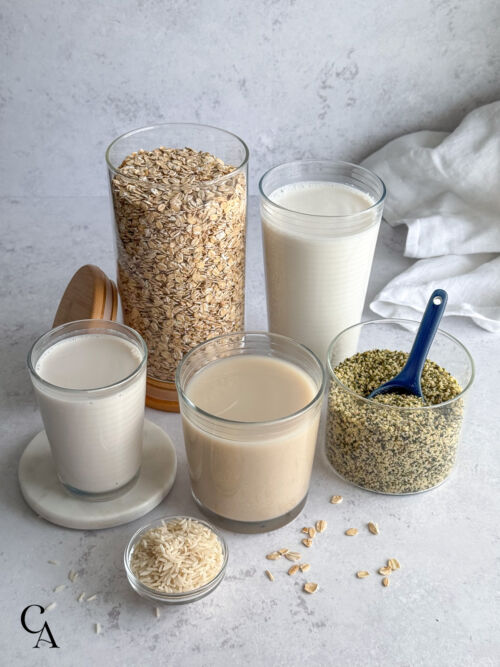
Oat Milk
Oat milk has become especially popular in beverages due to its naturally sweet taste.
Pros:
- Good alternative for nut and soy allergies
- Naturally sweet flavor
- Contains some protein
- Blends well with beverages
Cons:
- Risk of gluten cross-contamination unless certified gluten-free
- High in starchy carbohydrates
- Often thickened with canola or seed oils
- Non-organic oats are often desiccated with glyphosate, so they may contain harmful residual pesticides
TIP:
Choose organic, unsweetened, and certified gluten-free oat milk if you’re concerned about exposure or cross-contamination.
Rice Milk
One of the earliest and least nutritious dairy alternatives.
Pros:
- Widely available
- Another option for those allergic to soy or nuts
Cons:
- No protein
- High in starchy carbs
- Often contains added oils such as canola, sunflower, or safflower
- Little flavor with minimal overall nutritional value
Soy Milk
One of the most popular and nutritionally comparable non-dairy milk products to dairy.
Pros:
- Similar amount of protein to cow’s milk
- Rich, creamy, neutral flavor
- Works well in beverages, cooking, and baking
Cons:
- In 2020, 94% of the soy grown in the United States was genetically modified (i.e., “bioengineered)
- May cause digestive discomfort for some
- Contains phytoestrogens, which may be helpful for some people and not recommended for others
TIP:
Look for organic or non-GMO soy milk if that’s important to you. Remember, anything that is certified organic is automatically non-GMO.
How to Choose the Best Non-Dairy Milk
- Highest protein: Organic soy milk, concentrated almond or cashew milk
- Fewest carbs for balanced blood sugar: Any variety of unsweetened nut milk or organic soy milk
- For heart-healthy fats: Concentrated nut milks or hemp milk
- Nut-free: Organic, gluten-free certified oat milk (unsweetened) or organic soy milk
- For gut sensitivity: Minimal ingredients with no gums
Final Thoughts on Dairy-Free Milk Substitutes
There’s no single “best” non-dairy milk product—only the one that best supports your body, your preferences, and your lifestyle. We all have different nutritional requirements and values, and your needs may change over time. Variety is a good thing!
Generally speaking, the most supportive options tend to be:
- Unsweetened
- Organic
- Free from unnecessary additives
- Higher in protein
From there, it all boils down to what works for you—whether that’s something light and creamy to add to your morning matcha, or something more nutrient-dense to increase your protein intake.
With awareness and intention, non-dairy milks can absolutely fit into a balanced, nourishing eating plan.
🥛 In the comments below, let me know your favorites and why. Hearing from you makes my day.