How to Grow Blue Hydrangeas with Coffee Grounds
Besides the warmer weather, nothing gets my heart more excited for spring as the promise of big, gorgeous blue hydrangeas in my garden. Whether you clip them for arrangements or admire them from your porch or kitchen window, there’s a reason blue hydrangeas bring so much joy–they’re simply breathtaking.

In this post, I’ll show you how to encourage your hydrangeas to bloom in heavenly shades of blue using a free, non-toxic, natural by-product: coffee grounds.
What Makes a Hydrangea Blue?
The secret lies in the soil’s pH level. Alkaline soil leads to pink flowers, while acidic soil (containing aluminum) turns them blue. This is where coffee grounds come in—they help lower the pH naturally.
But hold that coffee filter—not all hydrangeas can turn blue.
Panicle hydrangeas (H. paniculata) produce white or green flowers, while oakleaf (H. quercifolia) and smooth hydrangeas (H. arborescens) typically bloom white, sometimes with a hint of blush.
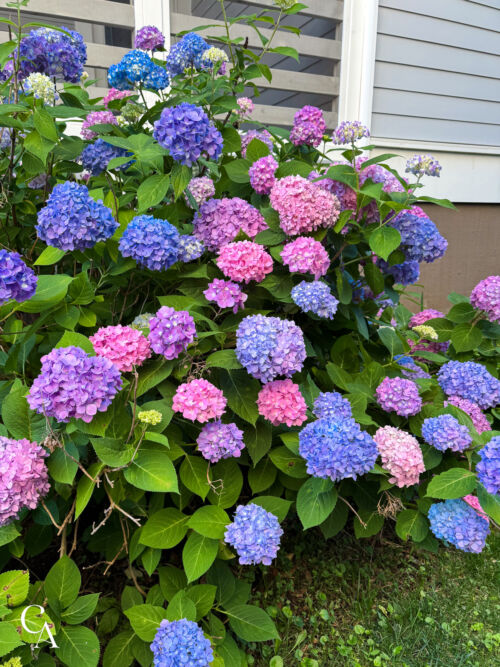
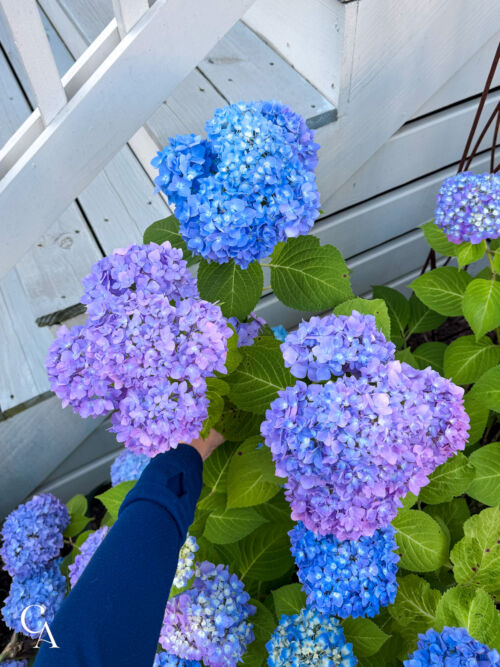
Only bigleaf hydrangeas (H. macrophylla) are color-shifters. I grow‘Endless Summer’, an excellent choice for growing blue hydrangeas with coffee grounds. ‘Nikko Blue’ is another popular cultivar. Depending on your soil’s pH, these varieties can bloom in pink, periwinkle, or blue—sometimes all on the same plant for a gorgeous natural ombré effect (and my personal favorite).
Soil pH for Blue Hydrangeas
Before you start sprinkling grounds, it’s helpful to test your soil’s pH. You can grab a simple kit online or at your local garden store—or just wing it like I did and let your hydrangea surprise you next spring.
Here’s a quick cheat sheet:
- Alkaline soil (pH above 7.5) produces pink blooms
- Neutral soil (pH around 6.5-7.5) produces periwinkle, purple or mixed blooms
- Acidic soil (pH below 6.5) produces blue blooms
Why Use Coffee Grounds?
There are plenty of commercial products that will acidify your soil and encourage blue hydrangeas, but I prefer non-toxic gardening for wellness, sustainability and simplicity. Coffee grounds gently shift the pH without synthetic compounds like aluminum sulfate.
Bonus perks:
- Free & Sustainable: Coffee grounds are a natural by-product you’re likely already making regularly.
- Safe: No harm to kids, pets or curious backyard critters.
- Less clutter: No extra bags collecting cobwebs in your garage.
- Grounding: Literally—make it part of your wellness ritual.
How to Use Coffee Grounds for Blue Hydrangeas
No need to baby your plants with daily doses—your hydrangea isn’t that needy, and your cup is already full (see what I did there? 😉).
- Collect used coffee grounds and refrigerate them in a glass container with a tight-fitting lid until ready to use. Avoid plastic—the acid slowly breaks it down, leaching micro-plastics over time.
- Sprinkle the grounds around the base of your hydrangea, avoiding direct contact with the stems. If you consider yourself a serious gardener, work them into the topsoil, otherwise just spread them around.
- Repeat a few times throughout the growing season.
When to Apply Coffee Grounds
Start in late fall or early spring, before new growth appears. This process is gentler than aluminum sulfate and it takes time. If your soil is highly alkaline it may take a full season before your hydrangea turns blue.
Keep in mind, this method won’t affect existing blooms—only new ones. Continue monthly during the blooming season to encourage blue blooms and enjoy the variety of colors throughout the process!
Make It a Ritual
Rather than just another task, make feeding your hydrangeas a mindful ritual. A ritual is anything done with intention.
I like to collect my coffee grounds throughout the week and head outside Saturday or Sunday morning, barefoot, to feed the soil. I listen to the birds, put fresh homemade hummingbird food in my feeder, feel the sun on my skin, and offer a little gratitude as I scatter the grounds. It only takes a minute or two—but it roots me in the moment and sets a calm, grounded tone for the day.
Come May, when those first buds pop and my yard is full of periwinkle blue hydrangeas, I feel so much joy.
FAQs
Use a natural soil acidifier, such as coffee grounds to reduce the pH of your soil to 5.2-5.5 for blue hydrangea blooms.
The pH of your soil determines whether your bigleaf hydrangea produces pink, periwinkle or blue blooms. Acidic soil (5.2-5.5 pH) produces blue flowers, while alkaline soil (pH over 7.0) results in pink blooms.
🔹 Don’t forget to save this natural gardening tip on Pinterest so you can enjoy blue hydrangeas all summer!