

Gremolata Recipe (Classic Italian + 3 Easy Variations)
This post may contain affiliate links to my favorite tried-and-true products. When you make a purchase, I receive a small commission at no additional cost to you. I only recommend what I use.
This gremolata recipe is a simple way to add bright, fresh flavor to everyday meals. Made with parsley, lemon zest, and garlic, this classic Italian condiment comes together in minutes by hand or in a food processor—and can be adapted into a gremolata sauce, an avocado spread, or even a creamy cashew herb sauce.

If you’ve ever found gremolata too sharp or overpowering, I’ll show you a few simple tweaks that make it more balanced, more versatile, and (in my opinion) even better the next day.
Whether you’re spooning it over roasted vegetables, stirring it into eggs, or using it as a finishing touch for fish or chicken, gremolata is one of those small additions that makes a big impact. Once you learn the base method, you can easily customize it to suit your taste, texture preferences, and dietary needs.
What is Gremolata?
Gremolata is an Italian condiment made from finely chopped parsley, garlic, and lemon zest. Some variations call for lemon juice, while others include olive oil, creating a gremolata sauce.
Fresh, bright, and full of zest, gremolata pairs beautifully with fish, chicken, and roasted veggies. It’s also delicious for breakfast—stir it into scrambled eggs or tuck it inside an omelette.
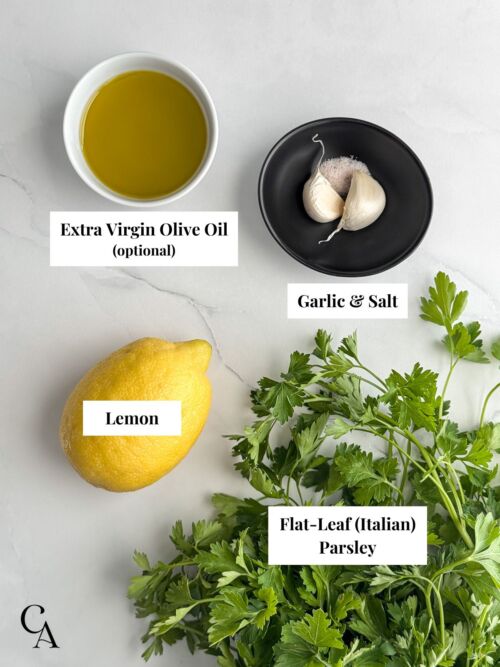
Key Ingredients
- PARSLEY – Flat-leaf (also called Italian parsley) is the most traditional choice, although curly parsley also works in a pinch. Organic is preferred.
- GARLIC – Fresh garlic imparts the strongest flavor, but see substitutions below for gentler options.
- LEMON – Classic gremolata uses only lemon zest, but a squeeze of juice adds extra zing if you like.
Optional Ingredients for Variations
- EXTRA VIRGIN OLIVE OIL – To transform your gremolata into a sauce
- SALT – Enhances the taste
- SUGAR – Balances the bitter and sour flavors without making it sweet
- AVOCADO – Use in place of olive oil to form a flavorful spread
- SOAKED CASHEWS – For a creamy, dairy-free gremolata
See the recipe card below for a complete list of measurements and instructions.
How to Make Gremolata (2 Methods)
Regardless of which preparation method you choose, this gremolata recipe comes together in under 10 minutes.
Method 1: by Hand
Chopping the parsley and grating the garlic and lemon zest by hand gives your gremolata a traditional, leafy texture—and it doesn’t take long. This method yields about 1 cup.
Method 2: Use a Food Processor
If you’re making a double batch, short on time, or prefer a smoother texture similar to basil pesto, a food processor is the way to go.
Because the ingredients are more finely processed, the volume will be reduced by half.
Note: You’ll need a food processor or high-speed blender for my cashew gremolata variation. A blender yields the most silky-smooth texture.
4 Gremolata Variations
Start with the classic version, then choose your favorite variation below.
1. Italian Gremolata Recipe
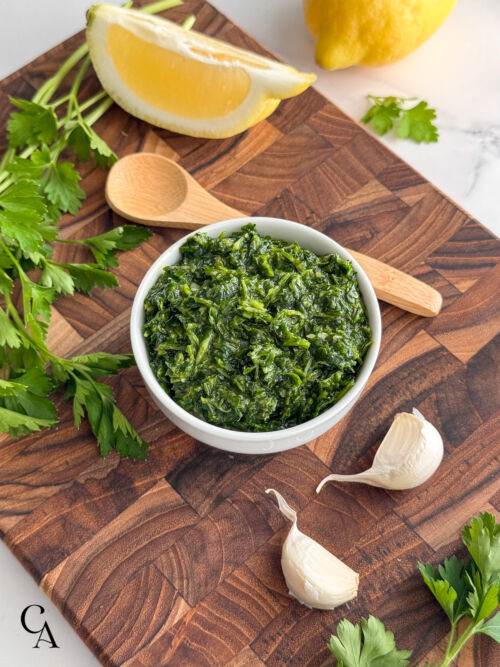
Classic Italian gremolata consists of finely chopped parsley, grated garlic, and lemon zest. This combination forms the base for all the other variations. Feel free to add lemon juice, sugar, and/or salt to any of the variations below.
2. Gremolata Sauce with Olive Oil
The addition of extra virgin olive oil creates a gremolata sauce with a consistency like pesto, especially if blended in the food processor.
3. Avocado Gremolata
Mashing the gremolata with a ripe avocado yields a tasty spread that’ll elevate your gluten-free avocado toast. I also like to smear it on top of zucchini fritters for breakfast.
4. Cashew Gremolata
This slightly more involved version blends soaked cashews (about 4 hours) with water and the other gremolata ingredients in a high-speed blender. The result is a fresh, creamy gremolata that goes well on pasta or shrimp. Like cashew pesto, it’s not traditional, but it’s tasty!
Garlic Substitutions
Raw garlic doesn’t work for everyone (me included). Here are some helpful workarounds so you can still enjoy the flavor:
Blanch The Garlic
Drop the peeled garlic cloves in boiling water for about 3 minutes before grating or processing. This mellows the flavor so it’s not as pungent.
Use Powdered Garlic
Roasted granulated garlic is my favorite alternative to fresh. Because it’s roasted, it has a richer flavor than regular granulated garlic, but that works as well.
Garlic Infused Olive Oil
If garlic gives you gas, you’re going to love this trick. I learned this from my gastroenterologist when I was recovering from SIBO. Because there are no garlic solids in the oil, you get all the flavor without the digestive discomfort.
Recipe Tips for Best Flavor
- Add ½ teaspoon sugar – Balances the bitterness of the parsley and tang of the lemon without making it sweet.
- Let it rest (if possible) – This gremolata recipe tastes even better the next day after the flavors mellow.
- Zest properly – Avoid the pith and use only the outer yellow skin of the lemon to prevent extra bitterness.
What to Serve with Gremolata
Gremolata is incredibly versatile and can be used to brighten up just about any savory dish. Here are some of my favorite ways to use it:
- Spread on zucchini fritters
- With scrambled eggs or inside an omelette
- Over chicken, or light fish
- On cauliflower steaks
- As a garnish for Butternut Squash Soup or Cauliflower Soup
- Mixed with boiled baby potatoes
- Drizzled over sautéed asparagus
FAQs
Flat-leaf or Italian parsley is best, but curly parsley works in a pinch.
Yes. It’s often much better the second day after the flavors have had a chance to mellow.
🌱Give this gremolata recipe a try and let me know your favorite variation in the comments below.
Print
Gremolata Recipe (Classic Italian + 3 Easy Variations)
- Prep Time: 5 minutes
- Cook Time: 3 minutes (optional, to blanch garlic)
- Total Time: 8 minutes (or less)
- Yield: 1/2 cup – 1 cup (depending on preparation method & variation) 1x
- Category: Sauce
- Method: Blending, Chopping
- Cuisine: Italian
- Diet: Dairy-Free, Gluten-Free, Keto, Low-Carb, Vegan, Vegetarian
Description
This bright, zesty gremolata recipe made with parsley, garlic, and lemon zest takes minutes. Includes 4 delicious variations: classic Italian gremolata, gremolata sauce with olive oil, avocado gremolata, and a creamy, dairy-free version with cashews.
Ingredients
(This is the foundation for all variations below)
1 bunch flat-leaf parsley, washed, large stems removed
2 large garlic cloves, peeled (or 1/4 teaspoon roasted granulated garlic – see notes)
Zest of 1/2 lemon (avoid the pith)
Optional (Recommended for Best Flavor)
2 teaspoons lemon juice (from 1/4 lemon)
1/2 teaspoon sugar
1/8 teaspoon salt
Gremolata Sauce
Base gremolata
1/4 cup extra virgin olive oil
Avocado Gremolata
Base gremolata
1 ripe avocado
Cashew Cream Gremolata
1/2 cup raw cashews, soaked in warm salted water for 3–4 hours
Base gremolata
+/- 1/4 cup water for blending
Instructions
Start with your preferred method, then choose a variation below.
Wash and thoroughly dry the parsley, then remove any large stems and finely chop.
Peel and finely mince the garlic or grate it using a microplane.
Zest the lemon, avoiding the white pith.
Add the parsley, garlic, and lemon zest to a small bowl and toss with a fork until evenly combined.
Stir in lemon juice, sugar, and/or salt if using. Adjust to taste.
Add the parsley, peeled garlic, and lemon zest to a food processor and pulse until finely chopped, scraping down the sides as needed.
Pulse in lemon juice, sugar, and/or salt, if using.
Stir or pulse in the olive oil until smooth and spoonable.
Mash the avocado by hand and mix with the base recipe, or pulse in the food processor until smooth and creamy.
Drain and rinse the soaked cashews.
Add the cashews, water, and prepared gremolata to a high-speed blender.
Blend until smooth and creamy, adding more water as needed to reach your desired consistency.
Spoon over roasted or steamed vegetables, fish, chicken, or eggs; toss with pasta or salads; or use as a finishing touch for zucchini fritters or cauliflower steaks.
Refrigerate gremolata in a glass jar for up to 3-5 days.
Avocado gremolata is best enjoyed fresh, but will keep for 1-2 days.
Tip: Pour olive oil over the top of it to slow oxidation.
Notes
Garlic Substitutions
Raw garlic can be quite strong or hard to digest. Try one of these gentler options:
- Blanched Garlic – Boil peeled cloves for about 3 minutes before using. This softens the sharp, pungent flavor.
- Roasted Granulated Garlic – A convenient alternative with a deeper, slightly sweeter flavor than regular garlic powder. 1/8 teaspoon is approximately equal to one clove of garlic.
- Garlic Infused Olive Oil – Adds garlic flavor without the solids, making it a great low-FODMAP option for easier digestion.


Gremolata is a quick and easy way to bring so much flavor to a meal, and I love these different variations. Let me know your favorite.